
The St. Croix County Arrest Log
No county webpage posts a rolling multi-day arrest blotter. The sheriff's jail hub links to Zuercher's current inmate portal and the active warrants list, but no 72-hour, seven-day, or weekly arrest archive sits behind it. The inmate view is a current-custody screen. Older arrest dates can linger there, though a record vanishes after a release or transfer. A wider log takes assembly. The sheriff's records custodian can fill a defined request for an arrest list, booking record, or photograph. City police departments hold incident reports their officers created. WCCA covers public court activity. Newspapers report selected events. None of these channels alone amounts to a complete St. Croix County blotter, so expect to combine them.
Weekend and holiday caution: the county posts no schedule and no catch-up day. A quiet page is not a quiet weekend. Silence can reflect delay, a release, a transfer, or the absence of any web archive.
The Daily Arrest Report page handles the same-day question. This page tracks the days after. Separating the two keeps a current-custody roster from being mistaken for a historical arrest log.
What a St. Croix Arrest-Log Entry Shows
The county exposes no standardized online blotter. That means no official multi-day field set or photo policy can be promised. Hudson's media-relations policy sketches routine arrest-log fields, while New Richmond and River Falls each lay out their own public-record routes. Name the agency and the date range.
| Possible entry field | How to read it |
|---|---|
| Date and time | The event or report date supplied by the agency. It may not be the date a newspaper publishes a story or a roster updates. |
| Location and case number | Agency context for the incident. A case number helps the custodian locate the correct report. |
| Name and birth information | Identifying data that can be limited or withheld. A matching name alone is not proof of identity. |
| Arresting or holding agency | The agency that made the arrest or the authority associated with custody. It is not necessarily the same as the jail custodian. |
| Charges | Charges as reported or booked at that stage. They can be changed, dismissed, or resolved in court. |
| Booking destination | When stated, the facility receiving the person. Hudson, New Richmond, or River Falls arrests may be sent to St. Croix County Jail, another county, or no jail at all. |
| Photo | Do not assume a photo accompanies a city log or news entry. The county public roster showed no photo in the inspected result. |
Hudson's policy lists fields like date, time, location, case number, name, birth date, and charges, within release limits. Those are items the department may release routinely. No live page or posting rhythm is promised. New Richmond's policy carries a warning. TIME, CIB, NCIC, DOT, and other agency records stay closed even when city police hold a copy. River Falls takes a different shape. Its form captures incident details and asks whether the requester wants photographs or digital media.
Third-party sites need labels. The unofficial RecentlyBooked county page shows why: its content is a publisher's claim, not a St. Croix County archive.
How to Read the St. Croix Blotter
Work the blotter in layers. Begin with the county's own custody source, then pin down which agency made or held the record, then request the missing history. News helps you find an event. An article should never stand alone as evidence of custody or outcome.
- Search the current inmate portal for a person who may still be in county custody. Note the arrest date and held-for agency.
- If the name is absent, ask whether the person was released, cited, transferred, or booked elsewhere. Absence from the current roster is not a historical negative.
- For Hudson, use the city records-request route and ask for the police arrest or incident record. For New Richmond, address the request to the Chief of Police as custodian. For River Falls, use the Chief of Police and the published request form.
- Send the sheriff a defined request for the arrest list, booking record, and photo, if maintained and releasable, with a date range and agency.
- Search WCCA for court continuity, then compare the court disposition with the initial arrest language.
The sheriff's public-records notice keeps requests simple. A request can be oral or written, should be reasonably specific, and gets answered as soon as practicable without delay. Wide date ranges cost more. A large span can create locating costs and a longer review, so ask for a fee estimate and electronic delivery.
Local News and Arrest Reports
Official pages stop where news begins. The Pierce County Journal runs River Falls Police Department reports in newspaper and PDF editions. Expect incident dates. Arrest narratives and transport references appear too. River Falls straddles the county line, so confirm the agency and the booking county before counting an entry.
The Pierce County Journal is the strongest blotter-style source.

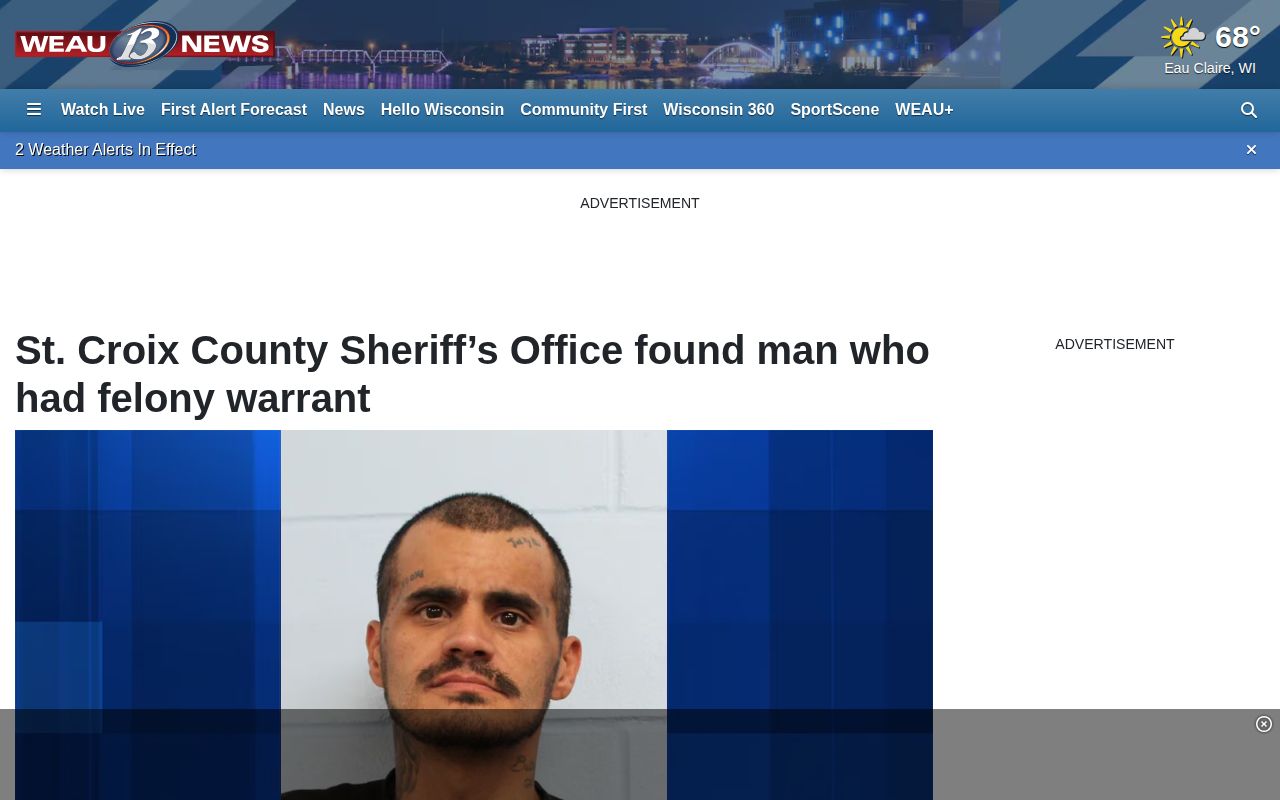
Hudson Star-Observer, New Richmond News, and River Falls Journal cover selected public-safety stories. None runs a stable mugshot gallery. None posts a complete county booking blotter. Warrant news travels its own path. A WEAU piece on a St. Croix County warrant shows how a warrant story can exist apart from any booking roster.
A WEAU warrant story covers a warrant, not bookings.
RecentlyBooked claims a 30-day county window refreshed several times a day. That claim belongs to the publisher. It may sit stale or incomplete. Treat any arrest report as a secondary lead and check it against the source agency, the court record, and the current custody state.
Arrest Log Archives and Retention
St. Croix County follows Chapter 2, a retention ordinance built on the County Records Retention/Disposition Schedule for 2024. Most series fall under that schedule. When none does, a seven-year fallback applies under Wisconsin law. Before destruction, notice must go to the Wisconsin Historical Society unless a schedule waives it, and records tied to a pending request, litigation, or audit stay protected.
The ordinance names no jail booking-sheet or mugshot period. A neighboring county's schedule does not apply. Ask the sheriff instead. Find out which series covers the arrest list, booking sheet, roster entry, and image, and whether each item was retained, transferred, or lawfully disposed of.
For an old St. Croix County arrest log, define the request. Ask for the date range, the arresting agency, and whichever booking record, booking photograph, arrest report, or court disposition you need. Removal from the public roster is not destruction. The live portal and the county retention schedule run as separate systems.
The Wisconsin Historical Society is a sensible archives starting point, though no verified St. Croix County jail-booking collection appears there. The county Clerk can sort out schedule or transfer questions. The sheriff holds the keys on custody. That office stays legal custodian of sheriff booking records.
Read Arrest Entries With Care
Arrest log entries read like shorthand. "Booked," "held for," and "charged" each mark a step in the process, so check the court record for how things ended. That keeps the officer's report distinct from the final disposition.
Details on juveniles, victims, medical matters, or sealed cases can be left out of an entry. A newspaper summary may not match the jail roster's custody status. Start with the agency. Go to the court next. Treat news accounts as context only, clearly labeled.